


.svg)


Who Controls Energy Efficiency in 2026? The Federal Government...or Your State?
As 2026 begins, energy policy in the United States reflects a mix of federal and state-level priorities. Federal policies, shaped in part by the Trump administration, have taken a different approach to energy efficiency and clean energy compared with states that have pursued their own initiatives. Understanding these differences provides insight into the current and future energy landscape in the U.S.
Federal Policy Trends
Energy Efficiency Standards
During the Trump administration, federal energy efficiency standards for appliances and equipment were reviewed and, in some cases, revised or delayed. These changes affected household appliances such as washers, dryers, air conditioners, and water heaters, with the Department of Energy citing regulatory flexibility and cost considerations for manufacturers and consumers.
Specific changes included:
- Delays to updated efficiency standards for central air conditioners, clothes washers and dryers, commercial refrigeration equipment, and walk-in coolers and freezers that had been scheduled to take effect under prior rules.
- Revisions to water heater standards, particularly for gas-powered instantaneous water heaters, which postponed stricter efficiency requirements.
- Adjustments to lighting standards, including rules affecting general service lamps, which slowed the transition to higher-efficiency lighting products.
- Changes to vehicle fuel economy standards, which reduced the rate of improvement required under federal Corporate Average Fuel Economy (CAFE) targets, allowing automakers more flexibility in meeting efficiency goals.
These actions slowed the pace of new federal efficiency requirements while maintaining existing baseline standards.
.png)
Tax and Incentive Policies
Federal tax incentives for clean energy and energy efficiency projects were also adjusted. Some credits were shortened or modified, influencing investment decisions for both businesses and homeowners.
Key changes included:
- Residential energy efficiency tax credits (Section 25C) for upgrades such as efficient HVAC systems, windows, and insulation were scheduled to expire after 2025 or were reduced in scope.
- Residential clean energy tax credits (Section 25D) for solar panels, battery storage, geothermal systems, and similar technologies were set to end earlier than originally planned, reducing long-term certainty for homeowners considering these investments.
- Credits for energy-efficient new homes (such as Section 45L) were shortened, affecting incentives for builders constructing high-efficiency housing.
- Proposals were introduced to phase out tax credits for wind and solar energy more quickly than previously scheduled, while maintaining longer-term credits for other technologies such as nuclear, hydropower, and geothermal.
These adjustments reduced the duration and predictability of federal financial incentives tied to energy efficiency and clean energy projects.
.png)
Impacts on Energy Outcomes
Federal policies have had observable effects, including shifts in electricity pricing and changes in consumer and industry behavior related to energy efficiency and vehicle standards. Analysts note that these policies aim to balance cost considerations with regulatory oversight and market choice, influencing how quickly efficiency technologies are adopted nationwide.
.png)
State-Level Approaches
California
California has maintained a focus on energy efficiency and clean energy deployment. The state continues to implement appliance and building standards, energy-saving programs, and renewable energy initiatives to meet its energy and climate goals. California also engages in legal and policy measures to support efficiency standards and expand access to incentives for residents and businesses.
.png)
Other Leading States
Several other states have developed energy efficiency and clean energy programs independent of federal policies:
New York:
Through programs such as NYSERDA (New York State Energy Research and Development Authority), New York promotes energy-efficient buildings, appliance upgrades, and clean energy deployment statewide.
.png)
Massachusetts:
Massachusetts maintains strong building codes, appliance efficiency programs, and incentives for residential and commercial energy-saving measures.
Vermont:
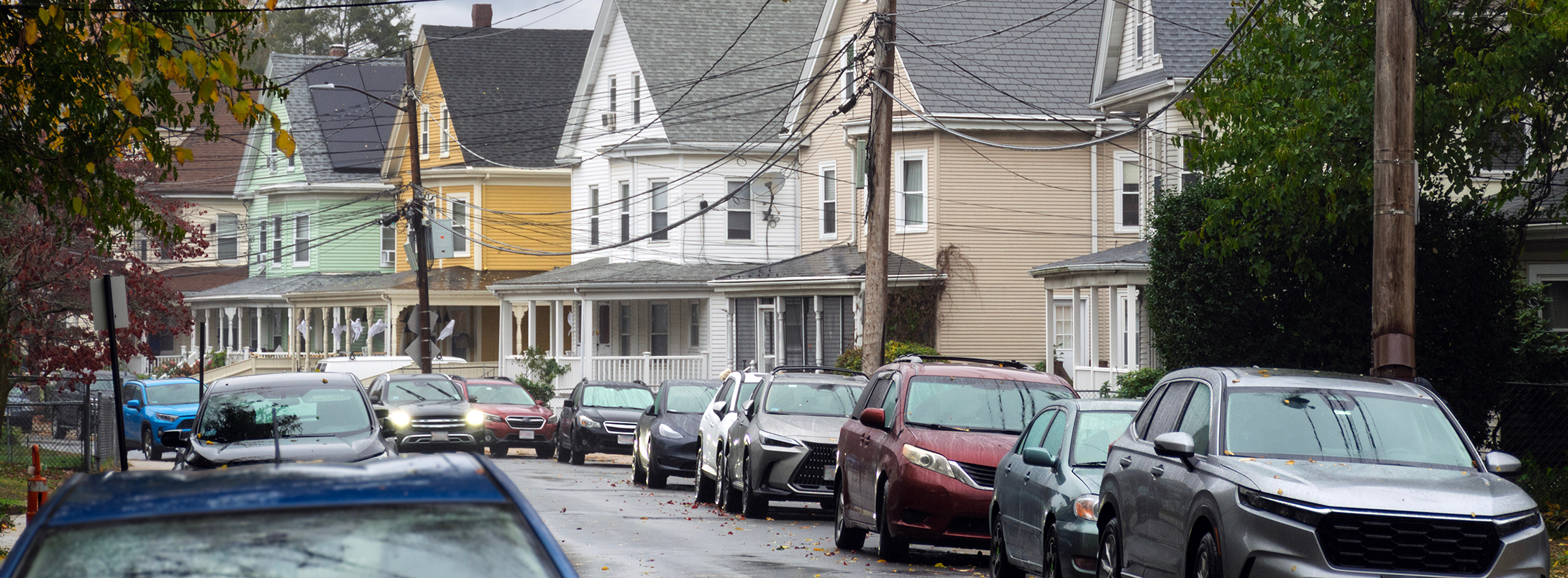
Vermont invests in renewable energy and efficiency programs, emphasizing weatherization and small-scale solar initiatives.
.png)
Washington and Oregon:
These states implement utility-driven efficiency programs and renewable portfolio standards, supporting energy savings and carbon reduction goals.
.png)
These states often work in collaboration with utilities, nonprofits, and local governments to achieve measurable efficiency improvements, energy savings, and emissions reductions.
Comparing Federal and State Paths
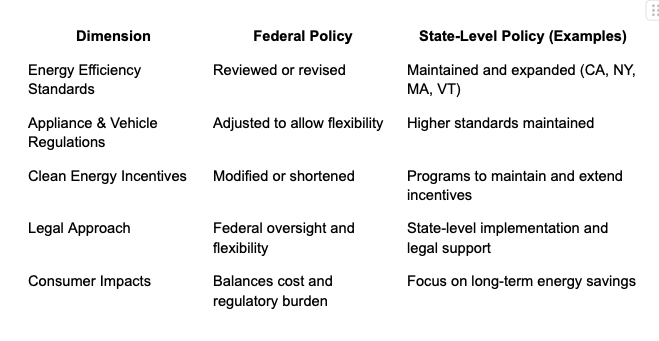
Observations
Federal policy emphasizes flexibility, market choice, and cost considerations, while many states, including California, New York, Massachusetts, Vermont, and several on the West Coast, have maintained strong energy efficiency and renewable energy programs. These multiple approaches influence electricity use, technology adoption, and investment decisions across the country, creating a diverse and evolving energy landscape.
.png)
Conclusion
In 2026, energy efficiency in the U.S. is shaped by both federal policies and state initiatives. While the federal government provides a broad framework, states are able to implement programs tailored to local priorities. This combination of approaches results in a dynamic energy landscape that affects costs, emissions, and innovation across the country.
If you would like to learn more about receiving energy-efficient products at no cost, explore our No Cost Programs and see how you can get involved today.
.png)


